Search Ads vs Display Ads: Which One Works Better?
Online advertising has become essential for businesses that want to attract customers, generate leads, and grow revenue. Among the many advertising formats available, Search Ads and Display Ads are two of the most widely used options. While both are part of Google Ads, they serve very different purposes and work best in different scenarios.
Many businesses ask the same question: Search Ads vs Display Ads—Which one works better? The answer depends on your business goals, target audience, and stage in the marketing funnel.
In this blog, AD SMART INDIA breaks down the differences between Search Ads and Display Ads to help you decide which option is right for your business.
What Are Search Ads?
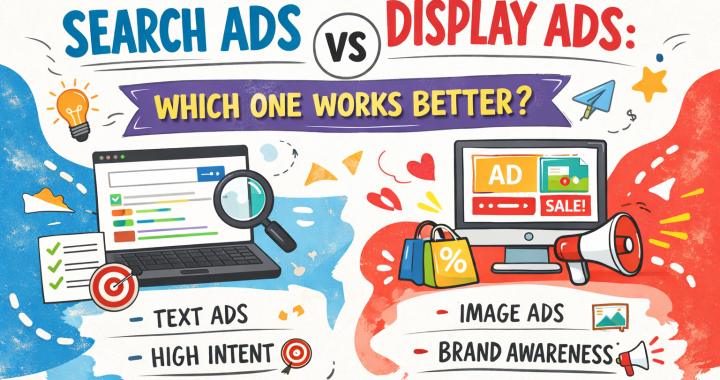
Search Ads are text-based advertisements that appear on search engine results pages when users actively search for specific keywords. These ads are shown based on user intent, meaning the person is already looking for a solution, product, or service.
Search Ads typically appear:
At the top or bottom of search engine results
When a user types a keyword related to your business
With headlines, descriptions, and clickable links
Search Ads focus on capturing high-intent traffic and are often used for lead generation and direct sales.
What Are Display Ads?
Display Ads are visual advertisements that appear across websites, apps, and videos within the Google Display Network. These ads use images, banners, graphics, or videos to attract attention.
Display Ads typically appear:
On blogs, news websites, and apps
As banners, image ads, or responsive ads
While users are browsing content, not actively searching
Display Ads focus on brand visibility and awareness rather than immediate conversions.
Key Differences Between Search Ads and Display Ads
Understanding the core differences between these two ad types is essential before choosing one.
User Intent
Search Ads target users with strong purchase or inquiry intent.
Display Ads appear across websites, apps, and videos.
Conversion Potential
Search Ads usually have higher conversion rates.
Display Ads are better for awareness and remarketing.
Benefits of Search Ads
Search Ads are one of the most effective forms of digital advertising when the goal is performance-driven results.
1. High User Intent
Users searching for keywords like “digital marketing agency near me” or “Google Ads services” already want a solution. This makes Search Ads highly effective for lead generation.
2. Better Conversion Rates
Because users are actively searching, Search Ads generally deliver higher conversion rates compared to other ad formats.
3. Immediate Results
Search Ads can start generating leads or sales as soon as the campaign goes live.
4. Budget Control
Advertisers have full control over bids, daily budgets, and keyword targeting.
5. Strong ROI
When properly optimized, Search Ads often provide the best return on investment for service-based and local businesses.
Limitations of Search Ads
Despite their advantages, Search Ads also have limitations.
High competition for popular keywords
Increasing cost per click in competitive industries
Limited reach to users who are not actively searching
Text-only format limits creative branding
Search Ads work best when users already know they need your product or service.
Benefits of Display Ads
Display Ads are powerful when used strategically, especially for branding and remarketing.
1. Massive Reach
Display Ads can reach millions of users across websites, mobile apps, and platforms.
2. Strong Brand Awareness
Visual ads help businesses build recognition, trust, and recall over time.
3. Remarketing Power
Display Ads are extremely effective for remarketing users who have already visited your website.
4. Lower Cost Per Click
Display Ads usually cost less per click than Search Ads, making them budget-friendly for visibility campaigns.
5. Creative Flexibility
Images, graphics, and videos allow stronger storytelling and brand identity.
Limitations of Display Ads
Display Ads are not ideal for all objectives.
Lower conversion rates compared to Search Ads
Users may ignore or skip banner ads
Requires strong creative design
Less effective for immediate lead generation
Display Ads work best at the top or middle of the marketing funnel.
Which One Works Better for Lead Generation?
For direct lead generation, Search Ads clearly perform better. Users actively searching are more likely to fill out forms, call businesses, or make purchases.
Businesses offering:
Services
Consultations
Local solutions
Emergency or urgent needs
will typically see higher ROI from Search Ads.
Which One Is Better for Brand Awareness?
For brand awareness, Display Ads are more effective. They help businesses stay visible, introduce new products, and create long-term brand recall.
Display Ads are ideal for:
New brands
Product launches
Seasonal promotions
Remarketing campaigns
Search Ads vs Display Ads: Which Should You Choose?
The choice depends on your business goals:
Choose Search Ads if:
You want immediate leads or sales
You target high-intent users
You have a limited budget
You offer specific services or products
Choose Display Ads if:
You want brand visibility
You want to retarget past visitors
You are launching a new brand
You want to support long-term marketing efforts
Best Strategy: Use Both Together
The most successful digital advertising strategies combine Search Ads and Display Ads.
How they work together:
Display Ads build awareness and familiarity
Search Ads capture intent when users are ready to act
Remarketing Display Ads increase conversions from Search traffic
Combined strategies improve overall ROI
Using both creates a complete marketing funnel from awareness to conversion.
Conclusion
Search Ads and Display Ads are not competitors—they are complementary tools. Search Ads excel at capturing ready-to-convert users, while Display Ads build awareness and keep your brand visible.
At AD SMART INDIA, we help businesses design balanced advertising strategies that use both Search and Display Ads effectively. Choosing the right mix ensures better visibility, stronger engagement, and higher returns on ad spend.
If you want smarter advertising results, the key is not choosing one—but using both strategically.